May 1 – Spirit Mountain TrilliumsTrilliums carpet the forest floor of Spirit Mountain in early May, signaling that springtime is fully underway. Because of their large white blossoms, they are easy to recognize, even from the roadside. This beautiful wildflower is one of the signature blooms of northern hardwood forests around Lake Superior and throughout the Northland, often appearing just before the trees fully leaf out.Trilliums are among the most remarkable wildflowers in our forests. Each plant displays a distinctive pattern of threes—three petals, three sepals, and three leaves—giving the flower a simple symmetry that is easy to remember.Each spring, the blossoms capture our attention, but historically, people also valued the plant's roots for their medicinal properties."Consider the lilies, how they grow: they neither toil nor spin, yet I tell you, even Solomon in all his glory was not arrayed like one of these."— Luke 12:27 Only the mind of God could create flowers like these and place them here for His glory. He created you for that same purpose. Give thanks to Him for today, for like the flowers of spring, it will soon pass.
May 2 - Green Skies of MayThe northern lights move across the quiet Northland sky in bright green colors, softly mirrored in the calm water below, while waves of light ripple above the forest. At night, the scene feels both strong and peaceful. It reminds us that some of nature’s most amazing sights appear without a sound. The aurora borealis happens when charged particles from the Sun collide with gases in Earth's upper atmosphere. Guided by Earth's magnetic field toward the polar regions, these particles excite oxygen and nitrogen atoms. Oxygen typically produces the vivid green light seen most often over Minnesota and the Lake Superior region.Standing under the northern lights always feels like seeing something special. The sky comes alive, moving and changing in ways that are hard to explain. Moments like this remind me how small we are and how beautiful the world really is.“The heavens declare the glory of God; the skies proclaim the work of his hands.” — Psalm 19:1Reflecting on these wonders, it's clear that sometimes the best reminders of God's glory come quietly in the night sky. Take a moment to look up, pause, and let yourself feel wonder again.
May 3 — Lonely LoonA majestic loon glides across Caribou Lake at sunrise, its haunting call echoing across the quiet water. Loons begin returning to northern lakes almost immediately after the ice disappears. Many pairs reunite each spring and often return to the same lake year after year to raise their chicks, a faithful rhythm that has echoed across the Northland for generations.Their name "loon" comes from the Old Norse word lomr, meaning "lame" or "clumsy," a reference to their awkward walk on land. Yet in the water, they are powerful swimmers and expert divers, able to plunge deep beneath the surface in pursuit of fish.The Common Loon is the state bird of Minnesota and one of the most iconic voices of the northern wilderness. Its eerie call drifting across a quiet lake is unforgettable."Look at the birds of the air; they do not sow or reap or store away in barns, and yet your heavenly Father feeds them. Are you not much more valuable than they?' - Matthew 6:26"How does a loon travel thousands of miles and return to the same lake each year? Such remarkable navigation reflects the order and design written into creation by the hand of God.
May 4 — Superior ShoresIt's May 4, and the change of seasons you can feel. The air is fresh, cool breezes move across the water, and the scent of damp pine fills the shoreline. Spring here often reveals itself more through sensation than sight. On this evening near Grand Marais, the setting sun bathes the shoreline of Lake Superior in warm hues of color.Daylight now stretches to about 14 hours and 30 minutes and is growing by nearly three minutes each day as the Northland moves toward the long days of June. Early May is one of the best times for dramatic shoreline sunrises and sunsets. The cold lake, calm mornings, and humid air frequently produce mist, glowing reflections, and soft atmospheric layers that make each scene unique.The Master Artist blends these elements for a brief moment of beauty while countless other scenes unfold across the world, each revealing His glory."From the rising of the sun to its setting, the name of the Lord is to be praised." — Psalm 113:3Every day creation offers a new masterpiece. Step outside, breathe deeply, and take it in. Today is going to be a great day.
May 5 - Swans on the LakeshoreTrumpeter swans land for a rest as they pass through the Northland on their flight north to Canada. Trumpeter swans are among the most remarkable birds in North America.These beautiful birds are the largest waterfowl species native to North America. They can weigh up to 30 pounds and have wingspans of up to 8 feet! Trumpeter swans typically mate for life. A pair will return to the same nesting territory year after year, strengthening their bond through synchronized swimming and beautiful courtship displays.Seeing a pair of trumpeter swans glide across a quiet Northland lake feels almost timeless—a beautiful reminder of the changing seasons and the rhythms of migration."Look at the birds of the air; they do not sow or reap or store away in barns, and yet your heavenly Father feeds them. Are you not much more valuable than they?" - Matthew 6:26This verse reminds us to trust in God's faithful provision. If He lovingly cares for the birds of the air, how much more will He care for us, who are far more valuable in His sight?
May 6 – Cascading Into SpringWith spring runoff in full swing, the rivers along the North Shore of Lake Superior are roaring with life. The Cascade River, one of the steepest rivers on Minnesota's North Shore, is a favorite destination for photographers and hikers alike.In the final few miles before reaching Lake Superior, the Cascade River drops nearly 900 feet in elevation, rushing through a narrow canyon and forming the stair-stepped waterfalls that give Cascade River State Park its name. These dramatic cascades were carved over thousands of years as the river cut through ancient basalt bedrock—reminders of the immense geological forces that shaped the Lake Superior region. The river winds through rocky gorges, where sights, sounds, and the fresh scent of rushing water come together to create a scene that lingers long in memory."Deep calls to deep in the roar of your waterfalls; all your waves and breakers have swept over me." — Psalm 42:7Waterfalls often symbolize the overwhelming power and abundance of God's love. Like the rushing waters of spring, His grace flows freely and relentlessly toward us—an ultimate gift waiting to be received.
May 7 — Seasons in ContrastFresh snow clings to these bright tulips, a reminder that spring in the Northland does not always arrive gently. Tulip bulbs remain safely protected underground through winter, but once their stems and petals emerge, they become much more vulnerable to sudden cold and heavy snow.Unlike tulips, early-spring wildflowers such as marsh marigolds and trilliums are well adapted to the Northland’s unpredictable spring. These hardy plants produce natural sugars and other compounds that act like antifreeze, lowering the freezing point inside their cells. Their flexible cell structures allow ice to form outside the cells without damaging the plant.Marsh marigolds often grow in wetlands where surrounding water moderates temperature swings, helping them withstand freezing nights. Because of these remarkable adaptations, marsh marigolds are often among the first flowers to brighten the northern landscape each spring.Through the camera lens, the contrast is striking—bright tulips bowed under fresh snow, while nearby wildflowers seem perfectly prepared for the cold."There is a time for everything, and a season for every activity under the heavens." — Ecclesiastes 3:1God designed each season with purpose. Just as He crafted every plant to thrive in its appointed time, He has also created each of us with a purpose—to bring Him glory.
May 8 — Loon’s NestIt doesn’t take long for loons to begin nesting after they return to their northern lakes. Familiar with their territory, they quickly get down to business soon after arriving from their wintering waters along the Atlantic and Gulf coasts. This loon’s nest, carefully hidden in the reeds along Caribou Lake, shows how quietly and efficiently the season begins.Loons build their nests right at the water’s edge, often on small islands, marshy shorelines, or protected bays. The nest sits only a few inches above the water, so the bird can slide directly in and out of the lake. Behind these behaviors lies the powerful instinct to reproduce, a drive built into every living creature. Across the natural world, animals work tirelessly to ensure the next generation survives, revealing a remarkable design built into life itself."But ask the animals, and they will teach you… Which of all these does not know that the hand of the Lord has done this?" — Job 12:7–10Watching a loon quietly keep its vigil on the nest is a gentle reminder that God’s care is reflected throughout His creation.
May 9 — Majestic PineStanding high above Lake Superior, this majestic pine clings to a basalt cliff near Tettegouche State Park on the North Shore as the first light of day spreads across the horizon.Cliff trees grow much more slowly than trees in sheltered forests. That slow growth produces dense, resilient wood that withstands fierce winds, heavy snow, and the harsh conditions along the big lake. As a result, some of these small, weathered pines are surprisingly old.Norway pines develop strong taproots and spreading lateral roots. When a seed germinates in a narrow crack in the basalt, its tiny roots follow microscopic fractures in the rock. Over time, they reach deeper into those cracks where moisture collects. Even the smallest crevice can eventually hold enough roots to anchor the tree securely for many years."So then, just as you received Christ Jesus as Lord, continue to live your lives in him, rooted and built up in him, strengthened in the faith…" — Colossians 2:6–7Like this pine gripping the cliff above Lake Superior, a life deeply rooted in truth can endure the winds and storms that come our way. Seek God today and let your roots grow deep in Him.
May 10 — Apostle Islands Sea CavesThe Apostle Islands lie just offshore from the Bayfield Peninsula on Lake Superior. After paddling my kayak a few miles across the clear water, I reached the sea caves along Sand Island. The clear water acts like a mirror, illuminating the caves from below and creating a remarkable scene— an unforgettable setting for photography.These caves formed over thousands of years as powerful waves, winter ice, and wind slowly eroded the soft red sandstone cliffs. Lake Superior acts like a giant sculptor, carving arches, tunnels, chambers, and pillars along the shoreline. Even today, the process continues. Storm waves on Lake Superior can reach 20–30 feet, gradually enlarging the caves and occasionally collapsing sections of the cliffs, forming new shapes.The Apostle Islands sea caves are one of the great natural wonders of the Lake Superior region.“Mightier than the thunder of the great waters, mightier than the breakers of the sea—the Lord on high is mighty.” — Psalm 93:4As I float alongside the caves, it is easy to recall the power and majesty of the Creator who formed them.
May 11 — Quiet Point on Lake SuperiorGolden light spreads across the calm waters of Lake Superior as morning breaks over a rocky point near Lutsen, Minnesota, on the North Shore.At first glance, there is nothing unusual about this scene. Sunrises like this unfold in thousands of places every morning. Yet in this fleeting moment along this quiet shoreline, it felt uniquely special—and the camera preserved it as a memory.Around May 11 in northern Minnesota, the sunrise point on the horizon shifts northward rapidly, moving about one degree every couple of days as we approach the summer solstice. Near Duluth, daylight now lasts about 15 hours, and each day still gains roughly 2½ to 3 minutes of additional sunlight.Dawn along the shore of Lake Superior is a peaceful time for reflection and thankfulness for the day ahead. Each new morning offers a fresh start and a quiet peace worth savoring."Let me hear in the morning of your steadfast love, for in you I trust. Make me know the way I should go, for to you I lift up my soul." — Psalm 143:8Thank you, Lord, for the hope found in every sunrise and for your grace that is new each day.
May 12 — Wave DesignSunlight refracting through the crystal-clear waters of Lake Superior creates ever-changing patterns on the colorful rocks just beneath the surface. This scene is a beautiful example of optical caustics—patterns of concentrated light formed when sunlight passes through moving water.Each small ripple on the lake acts like a tiny curved lens. The crests of the ripples focus sunlight, while other areas spread it out, producing a network of moving, bright lines called caustic patterns.These bright lines form where many refracted light rays converge, creating intense bands of light, while darker areas appear where fewer rays reach the rocks below. Because the ripples are constantly shifting, the patterns change and never repeat."And we all, with unveiled face, beholding the glory of the Lord, are being transformed into the same image from one degree of glory to another. For this comes from the Lord who is the Spirit." — 2 Corinthians 3:18Places like this quiet beach are a perfect place to pause and reflect on God's goodness. Just as light transforms the rocks beneath the water, reflecting the glory of the Lord, so too does His glory slowly transform our hearts into His image.
May 13 — Common RedpollThe tiny redpoll travels in lively flocks and seems to sing throughout the day. This little visitor paused among the birdfeeders with its companions, patiently waiting for a turn at lunch. The name redpoll comes from the small crimson patch on its forehead, called a “poll,” which stands out brightly against its soft brown and white feathers.The small northern finch thrives as a remarkable cold-weather specialist. Despite weighing only about half an ounce, they can survive temperatures as low as −60°F. On bitter nights, redpolls sometimes burrow into loose snow, where it acts as insulation, helping them conserve body heat.The redpoll is a wonderful example of thoughtful design for survival. Even in the harshest climates, God provides the food, shelter, and abilities these small birds need to thrive.“Look at the birds of the air: they neither sow nor reap nor gather into barns, and yet your heavenly Father feeds them. Are you not of more value than they?” — Matthew 6:26This verse reminds us of God’s constant care and provision. If He watches over even the smallest birds, we can trust that His love and provision extend to us as well.
May 14 — Spring Runoff at Gooseberry FallsWhen heavy spring rains combine with meltwater from inland swamps and bogs along Minnesota’s North Shore, the incredible power of moving water can be seen and felt. Early to mid-May is one of the best times to photograph waterfalls in the Northland, and Gooseberry Falls is among the most accessible and spectacular on the shore of Lake Superior.During spring runoff, the Gooseberry River swells dramatically as snowmelt and rain rush toward the lake. The normally gentle cascades transform into thundering curtains of water plunging over ancient basalt ledges. Standing near the falls, you feel the icy spray in the air and hear the deep roar of water echoing through the forest—an unforgettable experience that reminds us of the immense forces shaping the landscape.The unstoppable power of falling water offers a fitting picture of God’s grace. Just as the river pours endlessly over the cliffs, His grace flows continually toward us. We may ignore it for a time, but its life-giving power remains.“Whoever believes in me, as the Scripture has said, ‘Out of his heart will flow rivers of living water.’” — John 7:38Waterfalls remind us that the Creator’s hand is visible throughout nature, revealing both the beauty and the power of His creation.
May 15 — Lake Superior AgatesI never tire of photographing Lake Superior agates. The rich, earthy colors, intricate banding, and unique patterns in each stone are endlessly fascinating. These weren’t gathered from a beach — they sit in a bucket right behind me. When I want an agate fix, I simply stir the stones and discover a brand-new arrangement. This image was captured with my phone—nothing fancy, just a remarkable subject.Most of these agates were originally found in a gravel pit—dirty, dull, and easy to overlook. After weeks of tumbling through progressively finer grades of grit, their hidden beauty slowly emerged. What once appeared rough and ordinary became smooth and brilliant. Today, they proudly represent Minnesota’s state gemstone.Their transformation offers a quiet reminder of God’s providence. The beauty within the agate was always there—it simply needed time and refinement to be revealed."For you created my inmost being;You knit me together in my mother’s womb.I praise you because I am fearfully and wonderfully made;" Your works are wonderful, I know that full well." — Psalm 139:13–14The same providence is working in your life. You may feel the bumps and bruises, but the end result is for His glory.
May 16 — Marsh Marigolds - The Blooming BeginsBy mid-May, the wildflower procession begins with the yellow marsh marigolds blooming. These bright flowers emerge in the low-lying swamps and wetlands of the Northland, appearing almost overnight like splashes of gold across the landscape.One of the Northland’s earliest spring wildflowers, marsh marigolds often bloom while patches of snow and ice still linger nearby. Though called marigolds, they are actually members of the buttercup family, their glossy yellow “petals” technically being sepals designed to reflect sunlight and attract early pollinators.A marsh filled with blooming marsh marigolds beneath still-bare trees is one of spring’s most beautiful mileposts — a quiet reminder that new life has begun again.“See! The winter is past;the rains are over and gone.Flowers appear on the earth;the season of singing has come.”— Song of Solomon 2:11–12When you notice the wetlands glowing with these golden blossoms, slow down for a moment. The great procession of spring has begun.
May 17 - First Light at the HarborThe rising sun peeks over the lighthouse seawall at Canal Park, marking the start of another beautiful day on Lake Superior. As the sky glows with the warm colors of dawn, a seagull glides past the lighthouse, making its quiet morning patrol along the harbor.By mid-May, sunrise in Duluth comes early—around 5:30 AM—leaving plenty of time to savor a cup of coffee while watching a brand-new day unfold. The peaceful scene often catches the attention of early walkers and runners along the Lakewalk as they begin their morning routines beside the vast waters of Superior.Such is life in the Northland as the seasons turn—sunlight, birds, weather, and people each taking their place in the steady rhythm of creation.“God called the light Day, and the darkness he called Night. And there was evening, and there was morning—the first day.” - Genesis 1:5Each day is a gift. Take a moment to thank the Giver.
May 18 — May Supermoon RisingA brilliant supermoon rises through evening clouds over Caribou Lake. A supermoon occurs when the full moon happens near the point in its orbit where it is closest to Earth. At that time, the moon can appear up to fourteen percent larger and noticeably brighter than a typical full moon.Because the moon is rising through thicker layers of Earth's atmosphere, shorter blue wavelengths of light scatter away while the longer red and orange wavelengths pass through. This natural filtering gives the moon its warm, glowing color as it climbs above the horizon.Moments like this remind us that even familiar things in creation can still surprise us. The same moon that has risen over the Earth for thousands of years can still stop us in our tracks when it appears large and glowing in the evening sky."The heavens declare the glory of God; the skies proclaim the work of his hands." - Psalm 19:1 Take a moment tonight to look up. The beauty above us is not random—it is a quiet reminder of God's power, order, and faithfulness.
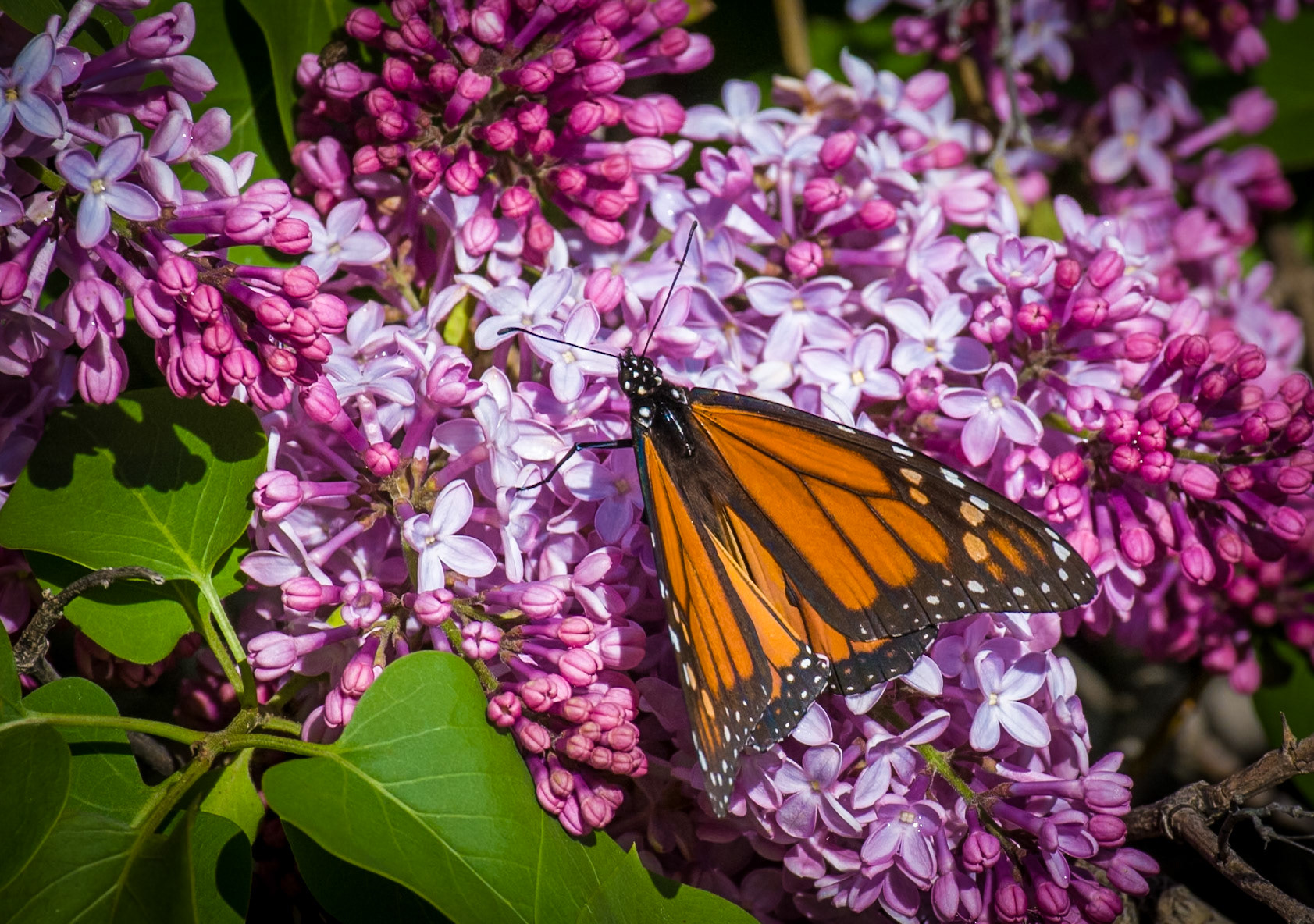
May 19 — Monarch on the LilacsA monarch butterfly pauses on a cluster of fragrant lilac blossoms, enjoying one of spring’s sweetest offerings. Lilacs bloom across the Northland in mid-May, filling yards and roadsides with color and fragrance just as the insect world returns to life. We see them all the time, but do we really pause to observe this remarkable insect?Monarch butterflies are among the most remarkable travelers in nature. The same species that appears in Minnesota each summer completes a multi-generation migration that stretches nearly 3,000 miles to wintering forests in central Mexico. Moments like this remind us how connected the natural world really is. A butterfly feeding quietly in a backyard garden may be part of a migration spanning an entire continent.“Look at the birds of the air; they do not sow or reap or store away in barns, and yet your heavenly Father feeds them.” — Matthew.Even the smallest creatures reflect the wonder of God’s creation, moving with purpose along paths we rarely see or fully understand. You are far more valuable in God’s eyes than these - think about it.
May 20 — Where the Water Finds Its WayTucked quietly within the Northwoods, Wagner Falls, Michigan, is located just south of Munising. It is a small waterfall that slips over ancient rock and continues its steady journey downhill. Scenes like this are easy to miss. There are no crowds or overlooks here—just water following the path carved for it through countless seasons.Spring runoff gives these hidden streams new life. Snowmelt and rain gather in the forested hills and spill into creeks that tumble over ledges and fallen logs before continuing their long journey toward Lake Superior. Moss, ferns, and young plants flourish in the cool mist, turning these shaded places into pockets of bright green life.The quiet movement of water reminds us that some of the most beautiful work in creation happens slowly and without announcement. Day after day, the stream flows, shaping the land and nourishing everything around it.God often works in our lives the same way—through steady grace rather than dramatic moments."He leads me beside still waters. He restores my soul." — Psalm 23:2–3Sometimes the greatest peace is found where the water quietly finds its way.
May 21 — TrilliumsTrilliums, with their quiet elegance, grace the forest floor of Spirit Mountain and many wooded areas across the Northland each May. These delicate wildflowers appear briefly each spring, continuing the beautiful procession of woodland blooms that awaken the forest after winter.The name trillium comes from the plant's perfect pattern of three—three broad leaves, three petals, and three sepals forming a graceful triangular design. Trilliums rely on ants to help disperse their seeds. Each seed carries a small, nutrient-rich coating that attracts ants. The ants carry the seeds back to their nests, eat the coating, and discard the seed—planting the next generation of trilliums along the forest floor.Many wildflowers bloom quietly and disappear just as quietly, unnoticed by most. Yet even these brief displays of beauty are part of a carefully designed cycle within creation."As for man, his days are like grass;he flourishes like a flower of the field;for the wind passes over it, and it is gone,and its place knows it no more."Psalm 103:15–16Like the trillium, life is brief and precious—reminding us to pause and appreciate the beauty placed before us each day.
May 22 — The Silent LighthouseStanding quietly along the shoreline of Grand Island on Lake Superior, this historic lighthouse once guided ships safely through the narrow East Channel into Munising Bay. Built in 1868, the light helped mariners navigate these waters during the busy years of lumber shipping along Michigan’s Upper Peninsula.Unlike most lighthouses, this one was built as a keeper’s home with a square tower rising directly through the center of the roof. From the lantern room above, its beam once stretched across the dark waters of Lake Superior, providing a steady point of guidance for vessels entering the harbor.Today, the weathered wood and sandstone foundation speak of many seasons of wind, waves, and winter ice. Though the light itself no longer shines, the structure remains a quiet sentinel along the shore.Just as ships once relied on this light for safe passage, we too need guidance for the journey ahead."Your word is a lamp to my feet and a light to my path."— Psalm 119:105Takeaway: In a world that can often feel uncertain, God’s Word remains a steady light, guiding our steps one day at a time.
May 23 — All Washed UpOn a quiet early morning walk along Park Point in Duluth, a weathered driftwood log rests half-buried in the sand. At some point in its long journey, the powerful waves of Lake Superior carried it here, depositing it high on the beach where wind and sand now slowly shape its final form.Over time, driftwood becomes a quiet work of art. Waves smooth the surface while wind and sand carve delicate patterns into the grain. What was once an ordinary tree is transformed by the forces of nature into something uniquely beautiful.Even at the end of its life, a simple tree can still bring joy to those who pass by. A piece of driftwood becomes a small landmark along the shoreline—an invitation to pause and appreciate the moment.“Mightier than the thunder of the great waters, mightier than the breakers of the sea—the LORD on high is mighty.” — Psalm 93:4Lake Superior has shaped this log just as the currents of life shape us. What may appear worn or “washed up” can still become something meaningful, reminding us to slow down and recognize the quiet gifts of each day.
May 24 — Guiding Light at Eagle HarborThe red-brick Eagle Harbor Light Station stands watch over the rocky entrance to Eagle Harbor along the northern edge of Michigan’s Keweenaw Peninsula. For generations, this lighthouse has been a symbol of safety and guidance to mariners navigating the often unpredictable waters of Lake Superior.The first lighthouse was built here in 1851, but the current structure dates back to 1871. The lighthouse rises 51 feet above the shoreline, and ships can see its beacon nearly fourteen miles out on the lake. Long before modern navigation systems, sailors depended on the steady glow of lights like this to find safe harbor.On dark, stormy nights, that light meant everything. The responsibility fell to the lighthouse keeper, whose faithful task was to keep the lamp burning, for weary sailors battling wind and waves, seeing that light meant relief, direction, and hope.“Your word is a lamp to my feet and a light to my path.” — Psalm 119:105Just as a lighthouse guides ships safely through dangerous waters, God’s Word provides direction for our lives. When the path ahead feels uncertain, His light reminds us that we are never navigating alone.
May 25 — The Hang OutHeron rookeries, with their tangle of nests rising from bare trees, resemble something out of a medieval forest—quiet, ancient, and alive with purpose. High above the water, herons build these large stick nests year after year, creating layered platforms that grow with each season.During the breeding months, the rookery becomes a busy neighborhood. Birds arrive and depart constantly, tending nests, feeding young, and calling across the trees. Each nest, though close to the next, holds its own small world.Herons show strong site fidelity, returning to the same rookery as long as it remains undisturbed. Some colonies have thrived in the same place for over 50 years. Maybe it's not so different from us—something deep within draws us back to where we belong."Look at the birds of the air; they do not sow, reap, or store away in barns, and yet your heavenly Father feeds them. Are you not much more valuable than they?" - Matthew 6:26 Sometimes the pull of home begins with the place we were born, but over time, it shifts toward something deeper—our heavenly home. Do you feel that quiet draw?
May 26 - A Close EncounterOn a cool morning, a yellow jacket settled into the sun on my deck. I carefully approached and snapped a photo. Later, looking more closely, I noticed a quiet beauty I had nearly missed—a reminder that even the smallest things carry remarkable purpose and design.Up close, this tiny insect reveals a world we rarely notice. What we often dismiss as a nuisance is, in truth, a finely tuned part of creation. Its patterned face, intricate eyes, and delicate hair reflect thoughtful design. As skilled hunters, yellow jackets work with precision, each playing a role in the balance of nature.It’s easy to overlook these details when we only see from a distance. Yet when we slow down and look closer, we begin to understand that nothing is without purpose.“Are not five sparrows sold for two pennies? Yet not one of them is forgotten by God.” — Luke 12:6If even the smallest creatures are known and cared for, we can trust that we are seen as well—valued, intentional, and never overlooked.
May 27 — Carved by GraceTwin Falls near Port Wing, Wisconsin, is a hidden gem tucked quietly along Highway 13. After a short walk through the woods, this unexpected cascade reveals itself—a special scene you might easily pass by without ever knowing it was there.Twin Falls is a living, changing scene—no two visits look the same. For a photographer, it's gold, the falls literally reinvent themselves with every stretch of weather.Larson Creek slips gently over the sandstone ledge, falling into a cool, shaded grotto before continuing its journey into Lake Superior. Over time, the steady flow has carved this natural amphitheater, shaping the rock with patient persistence—a quiet reminder of both strength and grace."In the wilderness He struck the rock, and water gushed out; streams flowed abundantly." — Psalm 78:20What once seemed impossible became a source of life. In much the same way, God continues to provide in ways we don't expect—bringing refreshment, strength, and hope when we need it most. Like this hidden waterfall, we often find His provision when we slow down enough to notice.
May 28 — Milky Way Horizon — Split Rock State ParkThe month of May is a wonderful time to view the Milky Way, with several hours of true darkness still available to capture this unforgettable celestial display. On clear nights from February through November, our solar system’s view of the galaxy slowly shifts across the sky from east to west. Here at Split Rock State Park, the Milky Way is one of my favorite places to photograph.The bright, textured core in this image is the center of our galaxy, containing an estimated 100–400 billion stars, all orbiting a supermassive black hole known as Sagittarius A*. The Milky Way itself is considered an average-sized galaxy among billions in the universe.Standing beneath this open sky, the noise of the day fades. In its place comes a sense of scale that humbles and steadies the heart. In the silence, you can’t help but feel it—Holy, Holy, Holy.“The heavens declare the glory of God; the skies proclaim the work of His hands.” — Psalm 19:1The same God who set these stars in motion sees us here on this shoreline. Under a sky this vast, we are reminded that we are small—but never unseen.
May 29 — Hovering GraceThe ruby-throated hummingbird returns to the Northland in mid-May, arriving just as the first flowers begin to open. These tiny birds are a welcome sight at feeders and a sure sign that spring has truly arrived.Suspended in midair, the hummingbird moves with a precision that feels almost unreal. Despite weighing no more than a nickel, these tiny birds migrate up to 2,000 miles each year. Many cross the Gulf of Mexico in a single, nonstop flight—over 500 miles of open water. Their days are spent in a constant rhythm of seeking and sustaining, yet there is no sense of hurry—only purpose.In a world that often feels rushed and restless, the hummingbird invites us into a different pace. To hover. To notice. To be present in the moment we are given.“Be still, and know that I am God.” — Psalm 46:10Stillness is not the absence of movement, but the presence of peace within it. Pause today on your journey through the seasons and take a deep breath, knowing it is God who sustains you every second of every day
May 30 — Crisp Point LighthouseNestled along the rugged shores of Lake Superior in Michigan’s Upper Peninsula, Crisp Point Lighthouse stands as a quiet sentinel of history. First lit in 1904 and rising 58 feet above the shoreline, it has long warned mariners of the treacherous waters along this remote coast.More than just a structure, the lighthouse represents resilience. Through relentless storms, isolation, and harsh conditions, keepers and their families faithfully maintained the light—often at great personal sacrifice—so others could navigate safely. Their legacy is one of courage, endurance, and selfless service.This enduring light offers a powerful reminder of God’s protective presence. Just as the lighthouse stood guard over passing ships, so too does God remain faithful—strengthening and shielding us through life’s uncertainties.“The Lord is faithful, and he will strengthen you and protect you from the evil one.” — 2 Thessalonians 3:3When we place our trust in Him, we find peace in knowing we are never unguarded. His strength becomes our refuge, and His faithfulness our steady light.
May 31 — Guiding Light — Eagle Harbor LighthouseEagle Harbor Lighthouse is one of the most picturesque lighthouses on Lake Superior. On this quiet May morning, loons played in front of the tower as I drifted nearby in my kayak, surrounded by the crystal-clear waters of the mighty lake.Perched along the rocky shoreline of Michigan’s Keweenaw Peninsula, the lighthouse has stood watch since 1871. Built of sturdy red brick to endure the harsh northern winters, its beam once guided copper-laden ships safely into harbor during the height of the region’s mining era. Today, though automated, the light still shines—continuing to guide vessels along Lake Superior’s often unpredictable shoreline.For generations, mariners looked to this beacon for direction and safety. In much the same way, we are reminded that true guidance does not come from within ourselves, but from a steady and faithful source beyond us.“Your word is a lamp to my feet and a light to my path.” — Psalm 119:105Even on the calmest days, we still need the Light.